

Venice Beach Renourishment Begins Soon —
And The Turtles Will Need To Watch Their Step
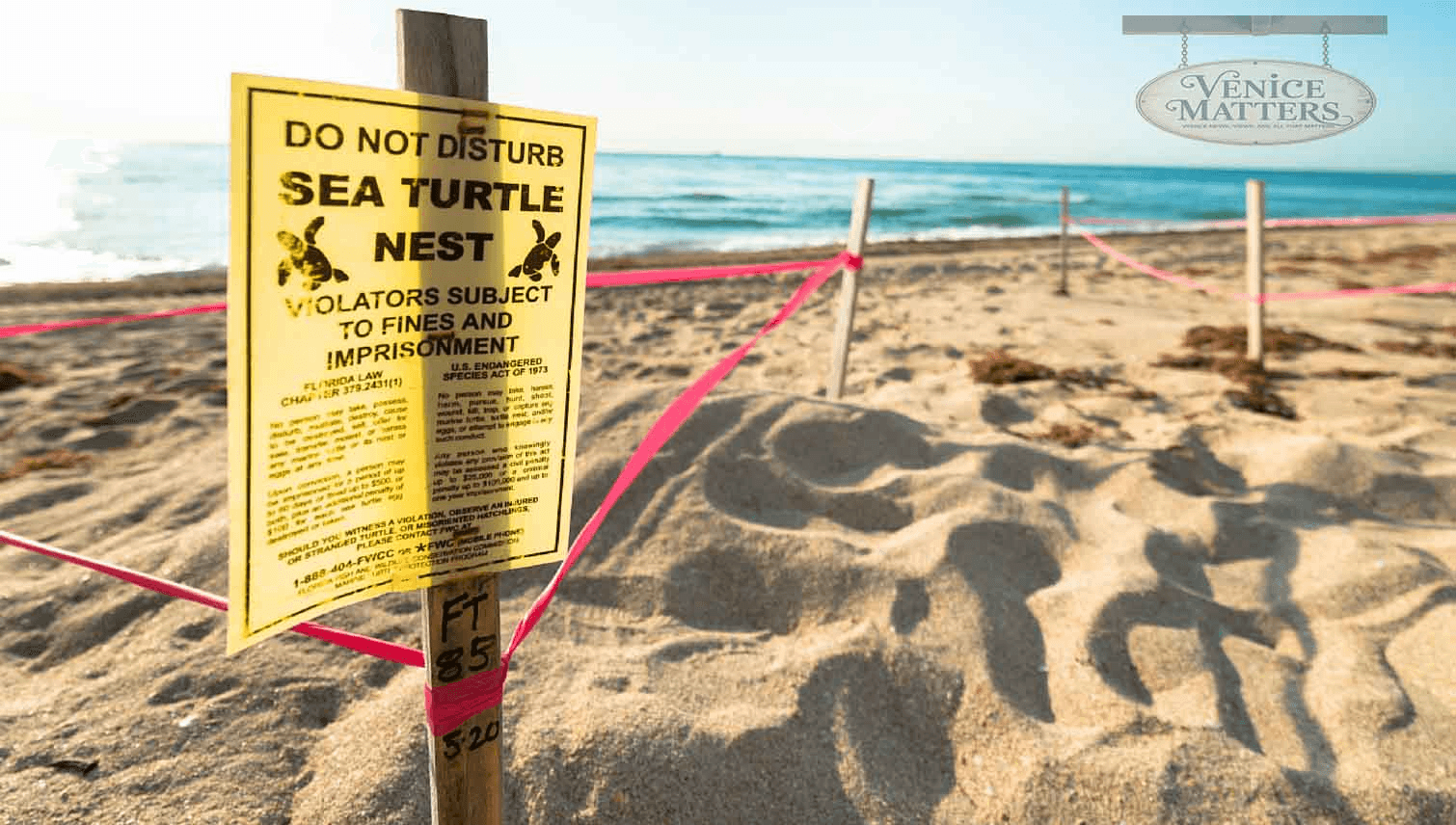
Every few years, Venice Beach gets a fresh coat of sand. Officials call it “renourishment.” Sea turtles might call it something else entirely: an obstacle course unfolding right in the middle of nesting season.
Later this month, a $27 million federally funded beach renourishment project is set to begin along roughly 3.2 miles of shoreline stretching south of the Venice Inlet past the Venice Fishing Pier. The effort, led by the U.S. Army Corps of Engineers, is designed to rebuild beaches that have steadily eroded from storms, tides, and time. According to MySuncoast News, sand will be dredged from offshore and pumped back onto the beach.

On paper, it’s coastal protection. On the beach, it’s something very different. Massive dredging operations offshore. Heavy equipment moving sand. Temporary closures. Sand pipelines stretching across the shoreline. Entire sections of beach transforming into active construction zones — all while sea turtle nesting season is already underway.
Sea turtle nesting season along Florida’s Gulf Coast runs from May 1 through October 31, a period when species like loggerheads emerge at night to lay eggs in the sand. The City of Venice beach renourishment project page acknowledges the overlap, noting that construction is proceeding now because of federal funding constraints rather than ideal environmental timing.
In other words, the turtles won’t be waiting for construction to finish.
They’ll be navigating it.
Environmental safeguards are expected. Monitoring teams, including Mote Marine Laboratory, are expected to help identify and relocate marine turtle nests that fall within active work zones. But even with oversight, the reality on the sand becomes far more complicated.
A nesting turtle doesn’t operate on a construction map. She crawls ashore, usually in darkness, searching for a suitable place to dig. That process depends on natural cues — beach slope, sand texture, lighting conditions — all of which can be affected when a beach is being rebuilt.
And this project won’t be small or quick.
Work is expected to continue into September, with residents seeing temporary beach closures, equipment staging, and restricted access around portions of the Venice Fishing Pier area. For visitors, that means detours, noise, and a beach that may look more like a worksite than a postcard for parts of the summer.
For sea turtles, it means something else entirely. It means choosing nesting sites carefully — avoiding equipment, navigating altered terrain, and adapting to a shoreline that may look and feel different from the one instinct tells them to expect.
Long term, renourishment is often framed as a benefit to both humans and wildlife, helping preserve the very beaches turtles depend on. This summer in Venice, survival might come down to timing, instinct… and a little extra caution.
What do you think? Better beaches or safer sea turtles?
0 Comments
Join the conversation
Be the first to comment
Share your thoughts above.